The Notice in the Window: How to Object to a Late Licence — and What the Committee Really Weighs
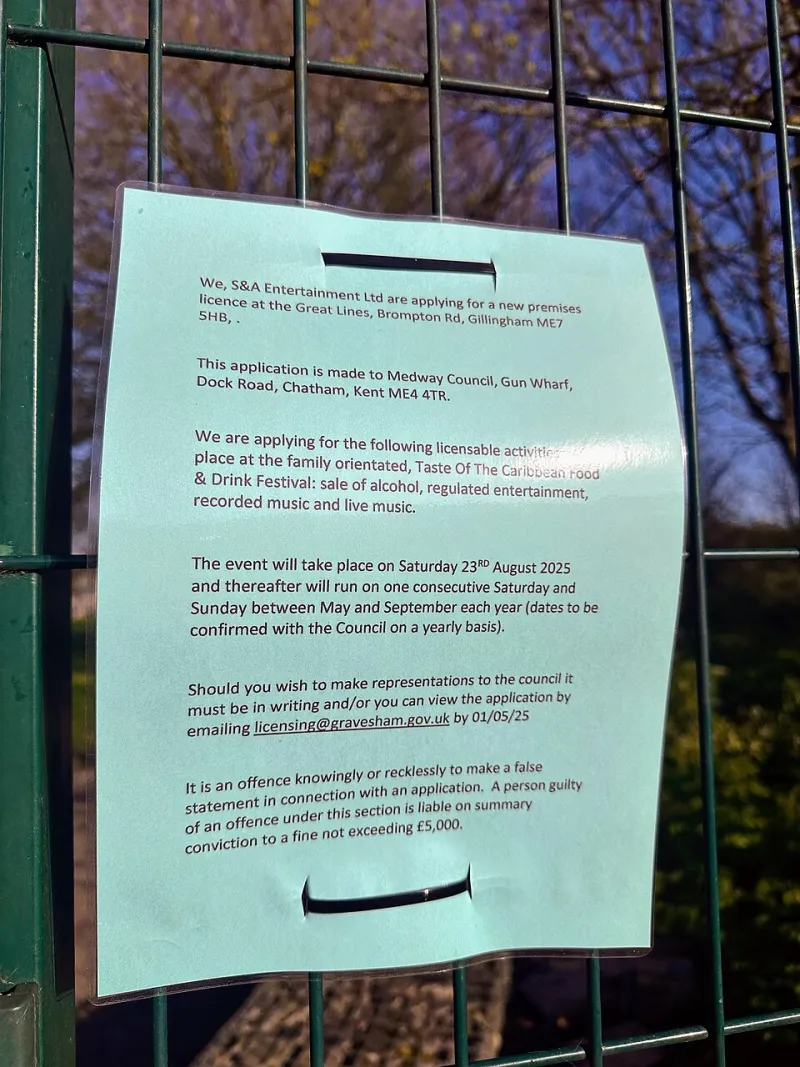
Photo: Sunolafjagtenben-hur, CC0, via Wikimedia Commons
You spot it on the way to the bus stop: a photocopied sheet taped inside the window of the empty unit on the corner. An application for a premises licence. Alcohol from 10am, recorded music until midnight, a beer garden described as “to the rear”, and a phone number for the council’s licensing team at the bottom.
The sheet will stay up for weeks, and the deadline buried in the small print is easy to miss. So here is the plain version: what you can object to, what the committee is actually allowed to weigh, and the mistakes that get otherwise reasonable objections quietly set aside.
Planning and licensing are two different arguments
This is the mix-up that costs residents the most, so it is worth getting straight first.
Planning controls what a building is used for and what it looks like — a change of use from shop to drinking establishment, an extraction flue, deliveries, signage, the beer garden’s fencing. Licensing controls the activities themselves: selling alcohol, serving hot food after 11pm, playing music, and the hours during which any of that can happen.
A venue can hold a premises licence and still need planning permission, or the other way round. They have separate registers, separate deadlines and separate committees. Check the council’s planning portal as well as its licensing register, and if the change of use has not been granted, say so in the planning process — not at the licensing hearing, where it will be ruled irrelevant.
The only four things the committee can weigh
The Licensing Act 2003 gives licensing authorities four objectives, and nothing else:
- Prevention of crime and disorder — includes anti-social behaviour linked to the premises.
- Public safety — capacity, fire exits, structural matters, drunkenness on the pavement.
- Prevention of public nuisance — noise, light spill, litter, smells, late-night taxis, customers congregating outside.
- Protection of children from harm — under-18s, not the general tone of the place.
Alongside those, the committee must have regard to the council’s own statement of licensing policy and the Home Office’s statutory guidance. Where the council has adopted a cumulative impact assessment covering the area, that carries real weight too.
Everything else is off the table. House prices, the fact that the town already has enough bars, whether a pint will cost more than it did in 2019, the applicant’s manner at a previous venue — none of it is a licensing objective. Nor is “need”: the statutory guidance is explicit that demand and competition between businesses are not considerations. Raise them at a hearing and you will be politely heard and lawfully ignored.
Making a “relevant representation”
You count as an interested party if you live or run a business in the vicinity, or if you belong to a body representing people who do. A residents’ association, a tenants’ group or a parish council can make a representation in its own name.
The statutory window is 28 days, beginning the day after the application was given to the council — not the day you happened to notice the notice. If you are close to the deadline, phone the licensing team and confirm the date in writing. Then:
- Put it in writing through the council’s licensing portal or by email, and keep a copy.
- Identify yourself and your address, and state plainly which objective or objectives you are addressing.
- Describe the specific problem you expect, with dates, times and places where you can.
- Finish with what you are asking for. Refusal of the whole application? Later closing time only at weekends? A condition on the garden closing at 9pm? A capacity limit? A condition requiring staff on the door after 11pm?
A representation must be relevant to the objectives and must not be frivolous or vexatious — which is a lawyer’s way of saying the authority can bin it if it plainly isn’t about licensing.
Evidence that shifts a decision
Committees are made up of councillors, not acoustics engineers, so clear evidence beats loud evidence every time.
- A dated log. “Bass audible in the back bedroom from 23:40 to 00:50 on 12 September; had to move the children” is worth more than “it’s always noisy”.
- Recordings and photos with timestamps. Keep them short and labelled.
- Incident records — the police’s own data, environmental health noise reports, anything with a reference number.
- Several individual statements in residents’ own words, each with specifics, rather than a 300-name petition with no detail on it. A petition proves concern; it does not prove nuisance.
- Practical suggestions. Officers respond better to “the smoking area would work better at the front, as at the pub on Mill Lane” than to a demand for outright refusal.
Hearsay and feeling are allowed but discounted. Facts with dates are what the committee writes into its reasons.
What the hearing actually looks like
A licensing sub-committee of three councillors, usually sitting in public, usually with a legal adviser and a clerk. You should get at least ten working days’ notice. The licensing officer presents the application, the applicant makes their case, the responsible authorities — police, environmental health, sometimes planning and child protection — give their views, and then objectors speak. The chair keeps time, and three minutes means three minutes.
The committee can grant the application as it stands, grant it with conditions, exclude one activity, reduce the hours, or refuse it outright. Reasons are given in writing afterwards.
Five ways objections get thrown out
- Missing the deadline. Nothing else on this list matters if you do this.
- Arguing planning at a licensing hearing. Different statute, different committee.
- Arguing need or competition. “We already have enough pubs” is not an objection in law.
- No ask. A committee that is not told what you want will usually grant the application as applied for.
- Saving it all for the hearing. Mediation beforehand — a sit-down with the applicant and the licensing officer — settles more noise disputes than any hearing. Arrive with a proposed condition and a reason for it.
One more: residents cannot formally object to a temporary event notice in the way they can to a licence, so if the same site keeps popping up with TENs, the route is environmental health and the council’s licensing policy, not the hearing list.
After the decision
If the licence is granted and you made a relevant representation, you — like the applicant and the responsible authorities — can appeal to the magistrates’ court within 21 days. Beyond that, any interested party can apply for a review of a licence at any time, which is how a venue with a year of complaints against it gets its conditions tightened. Keep the log going after opening night. That is what a review is built from.