When the Chair Says ‘Three Minutes’: A Resident’s Guide to Planning Committee
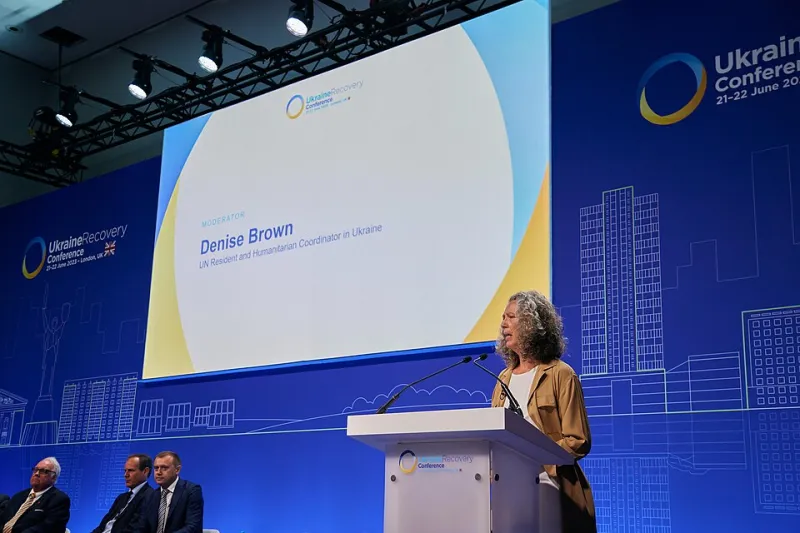
Photo: Foreign, Commonwealth & Development Office, CC BY 2.0, via Wikimedia Commons
You have checked the agenda, taken a half-day off work, and sat through two applications about extensions you do not care about. Then the chair says your name, points at the microphone, and tells you that you have three minutes. It is a strange kind of public speaking: part evidence session, part local democracy, part stopwatch.
Planning committee can feel opaque from the public seats. But the speaking slot is one of the few moments when residents are formally part of the process. Used well, it can put a real local issue in front of councillors who may only have read the officer’s report. Used badly, it can vanish into a blur of general frustration.
This is a plain guide to making those three minutes do some work.
What the committee is actually deciding
A planning committee is not a referendum on whether a development is popular. Councillors are deciding whether an application is acceptable in planning terms. That means they must look at the development plan, national planning policy, the officer’s report, and what are called material considerations.
Material considerations can include things like design, height, traffic, parking, noise, drainage, heritage impact, affordable housing, and whether the proposal fits the street. They cannot usually include the effect on your house price, whether you personally dislike the developer, or the fact that the same firm once left a skip outside your house for a month.
This matters for your three minutes. If your objection is mostly about property values or a private dispute, the chair may politely explain that it is not a planning matter. If it is about overlooking, highway safety, flood risk or the loss of a much-used community facility, you are in the right territory.
How the three-minute slot works
Arrangements vary by council, but the pattern is similar. You usually need to register to speak before the meeting, often by midday or a day or two beforehand. The committee clerk will ask for your name, the application reference, and whether you are speaking for or against. There may be separate slots for objectors, supporters, the parish council, and the applicant.
The chair controls the clock. Three minutes usually includes any shuffling with the microphone and any pause while someone finds the right page. If several people want to speak, the council may group them or ask one person to speak on behalf of a group. Do not assume you can hand your time to someone else.
You can normally submit written representations instead, and they still form part of the committee papers. If you cannot attend, a written objection is not wasted. But speaking in person does give you a moment that written words do not: you can look at the councillors and answer the obvious local question directly.
Preparing your three minutes
Write down one sentence that says who you are and why you are there. Then pick two, maybe three, points. Not ten. Three minutes is roughly 400 words, and that is before you stumble over the application number.
Use the planning register. Read the officer’s report. Look at the plans, the transport statement, the flood risk assessment if there is one. If the report says the site is not at risk of flooding, do not simply say that it is; find the specific reason you think the assessment is wrong. A dated photograph of standing water at the access point is worth more than a paragraph of alarm.
It also helps to say what you want. Do you want the application refused? Do you want a condition attached, such as a construction management plan or a footpath improvement? Do you want the committee to visit the site before deciding? Councillors respond better to a clear ask than to a general appeal to common sense.
What councillors can weigh — and what they can’t
Councillors can weigh the development plan, the officer’s recommendation, consultation responses, and any new evidence you present that is relevant to planning. They can disagree with their officers, but they need reasons that would stand up if the decision were challenged. They cannot simply refuse an application because 300 people signed a petition, although the strength and planning relevance of local feeling can matter.
They also cannot normally consider things like the loss of a view, competition to an existing business, or the developer’s behaviour on another site. They can consider whether the development would be safe for pedestrians, whether it would cause unacceptable noise, or whether it would harm a conservation area. The trick is to translate your concern into planning language without sounding like you are reading from a textbook.
Mistakes that make you easier to dismiss
Reading out a long petition is usually a mistake. The committee already knows how many people objected. Reading a list of names does not add a planning reason. Equally, opening with ‘we are not against development, but’ and then opposing every form of development can make your position look pre-set.
Do not attack the planning officer personally. Do not repeat what the previous three speakers said unless you have a genuinely different point. Do not save your best evidence for the second half of your slot and then run out of time. And do not tell councillors that they will be personally responsible if a child is knocked down; it may feel satisfying, but it tends to close ears rather than open them.
The most common mistake is simply trying to say too much. A tight three minutes with two specific points and a clear request is more likely to be remembered than a breathless tour of every grievance since the site was first fenced off.
What happens after the vote
After you sit down, the committee may ask questions, debate, and vote. They may approve the application, refuse it, defer it for a site visit, or approve it with conditions. The decision notice will follow, and there is usually a period in which an appeal can be lodged. If you think the council has got the process wrong rather than the outcome, there are separate routes: a complaint to the council, and in some cases the Local Government and Social Care Ombudsman.
But most of the time, the vote is the end of the public conversation. The three minutes are not a magic lever. They are a chance to put a local fact on the record. Do that clearly, and you have done the job the slot allows.