The Estate Got Built. So Where's the Bus Stop?
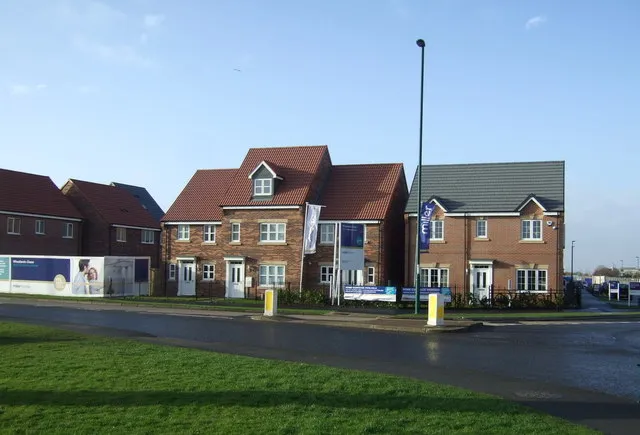
Photo: JThomas , CC BY-SA 2.0, via Wikimedia Commons
You know the sequence by now. The field with the horses gets a fence around it. Then a sign appears with a picture of a nice tree and the words 'outline application'. Then the diggers arrive, then the houses, then the people — and then nothing. The playground that was promised in the brochure is still a padlocked patch of mud three winters later.
That gap between what developers promise and what residents actually get is where Section 106 agreements live. They're not glamorous, they're not secret, and they're not always a scandal. But they are one of the few places where ordinary residents can genuinely follow the money with a spreadsheet and a bit of patience.
What a Section 106 agreement actually is
When a council grants planning permission, it can attach a legal agreement under section 106 of the Town and Country Planning Act 1990 — usually called a 'planning obligation'. It's a contract between the council and the developer, signed at the point of permission, and it sits outside the normal planning conditions.
In plain terms: the developer gets to build, and in return commits to things that make the development acceptable. That might be £400,000 towards school places, a parcel of land for a play area, six affordable homes, a contribution to a bus service, or a new crossing on the road that will suddenly carry 600 extra cars.
It is not the same as the Community Infrastructure Levy (CIL), which is a fixed charge per square metre. S106 is bespoke and negotiated, which is exactly why it's worth reading.
Why the money arrives years after the houses
The single most misunderstood thing about developer contributions is when they're paid. Most agreements don't hand over a cheque at the start. They use triggers.
A typical clause might read that a payment becomes due 'on the occupation of the 150th dwelling'. Another might require the play area to be 'laid out and available for use' before 75% of homes are occupied. Some money is index-linked, so the figure rises with inflation. Some is split into phases.
This matters because trigger-based payments are sensitive to the market. If the developer slows build-out during a slump — which is entirely legal and often entirely deliberate — the trigger never quite arrives, and neither does the money. Residents see finished houses and assume the cash followed. It often hasn't.
Deadlines that move without anyone announcing it
Agreements can be varied. A deed of variation can stretch a delivery deadline, swap a play area for a different piece of land, or reduce a contribution after the developer argues the scheme is no longer viable. These changes are legal, they're usually approved by a planning committee or under delegated powers, and they are frequently buried in a planning application that looks administrative.
You won't get a letter. That's the bit worth being cross about, and it's the bit councils can most easily fix.
How to find your local S106 register
Search for '[your council name] section 106 register' or 'planning obligations register'. Most English councils publish one, though the quality ranges from a neat interactive map to a scanned spreadsheet last updated in 2021.
If it isn't online, ask. A written request for the register, the agreements relating to a specific site, and the spend to date is a standard ask for a planning department. If they drag their feet, the Freedom of Information Act and the Environmental Information Regulations give you a route in — and many councils will simply send it.
When it lands, look for four things:
- The trigger clauses. What has to happen before money is due?
- The spending deadline. Many agreements require the council to spend a contribution within a set period, often five or ten years, or return it.
- Variations. Is there a deed of variation, and what did it change?
- Who holds it. Some money sits with the council, some with the county for schools or highways.
Four questions worth putting in writing
Email your planning department or your ward councillor. Keep it short and specific:
- For the development at [site], what contributions remain outstanding, and what triggers each one?
- Has the agreement been varied, and on what date was that agreed?
- What has been received to date, and what has it been spent on?
- Is there a neighbourhood portion of CIL or S106 allocated to this ward, and how does the parish or community decide what it's spent on?
Councils answer these questions more readily than you might expect, partly because the answer is usually 'nothing has changed' and partly because a written question creates a record.
The bigger picture
Ministers have spent the past few years consulting on replacing the whole system with a consolidated infrastructure levy, and the detail keeps shifting. Whatever replaces S106, the underlying tension won't disappear: contributions are negotiated in private between a planning authority with limited legal muscle and a developer with expensive lawyers, and residents only find out afterwards.
That's not a reason to give up on it. It's a reason to read the register before the next application lands on your street — while there's still a chance to argue about the bus stop.