Following the Swings: How to Trace Developer Contributions From Permission to Playground
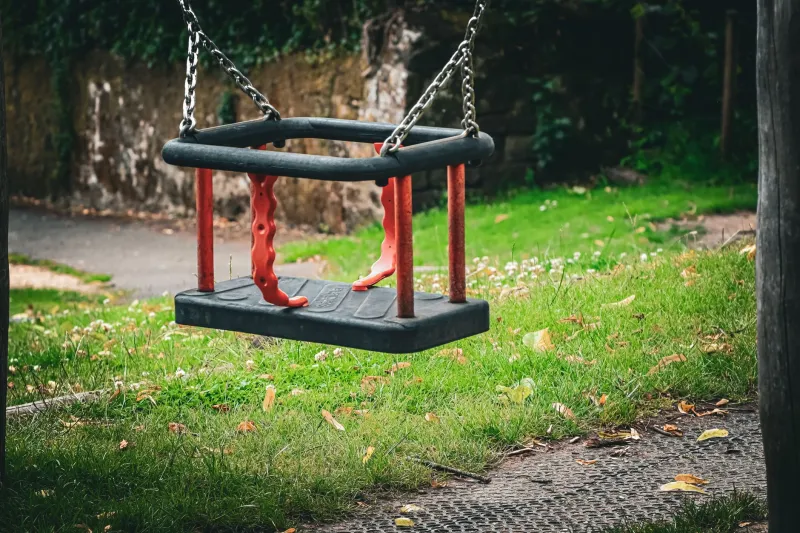
You know the scene. The new estate has been finished for a year, the sales boards have come down, and the promised play area is still a patch of grass with a single bollard. Someone at the parish meeting says the money ‘was in the Section 106’. Someone else says it was CIL. Nobody seems to know where it went.
Developer contributions are one of the most useful bits of local planning to understand, partly because they are meant to be public. The trouble is that the paper trail runs through planning registers, committee reports, legal agreements, annual statements and council spreadsheets. It is not impossible to follow, but nobody hands you a map.
This is that map.
Two pots of money, one confusing name
Section 106 agreements are legal agreements attached to a planning permission. They are negotiated between the council and the developer and usually tie specific obligations to a specific site. That might be affordable housing, a play area, a footpath, a bus stop contribution, or money towards a school place. They are often triggered at particular points in the build, which is why a site can look finished while the contribution has not yet been paid.
The Community Infrastructure Levy, or CIL, is different. It is a charge on new floorspace, set by the local authority, and collected as a cash sum rather than a site-specific promise. Councils spend CIL on infrastructure to support growth, such as roads, schools, green space or community facilities. A portion of CIL — often 15 per cent, or 25 per cent where there is a neighbourhood plan — goes to the parish or ward where the development happened.
So when someone says ‘the playground money’, it could be a site-specific S106 obligation, a CIL allocation, or both. Knowing which one you are chasing is the first step.
Where the paper lives
The planning register is your starting point. Find the application, open the officer’s report, and search for ‘Section 106’, ‘S106’, ‘CIL’, ‘contribution’, ‘affordable housing’ and ‘play’. Committee minutes often repeat the key obligations. The decision notice will list conditions, but the S106 agreement itself is sometimes published separately.
Many councils now have a developer contributions page, an S106 tracker, or a CIL page. Some publish the actual agreements as PDFs; others only publish a summary. If the agreement is not online, ask for it. It is a public document, though personal details may be redacted.
The most useful single document is the Infrastructure Funding Statement. Councils that collect CIL must publish one each year, usually by the end of December, setting out CIL receipts, spend, allocations and a summary of S106 obligations. It is not always written for bedtime reading, but it is the closest thing to a balance sheet for developer money.
The paper trail, step by step
-
Find the planning application on the council’s planning register. Note the reference number and the site address.
-
Read the officer’s report and committee minutes. Highlight every contribution promised: play equipment, footpaths, affordable homes, drainage, highways, libraries, open space.
-
Search the council website for the S106 agreement by application reference. If it is not there, email the planning department and ask for a copy.
-
Check the latest Infrastructure Funding Statement. Search for the site, the ward, and the parish. See whether the money has been received, allocated, spent, or is still outstanding.
-
If the contribution is CIL, ask the parish or town council whether it has received its neighbourhood portion. Ask what it has been allocated to and when it will be spent.
-
Look at the planning conditions and the S106 trigger points. Some money is only due when a certain number of homes are occupied. A missing playground may be a delay rather than a disappearance.
-
Visit the site and take dated photographs. Compare what is there with what the approved plans and the agreement promised.
-
Ask the council’s S106 monitoring officer — or the planning department if there is no named officer — for a written update. Ask three questions: how much has been received, what has been spent, and what is the deadline for delivery?
When the money is there but the swings aren’t
This is where residents often hit a wall. The council may say the money has been collected but not yet allocated. The developer may say the trigger has not been reached. The parish may say it is waiting for the council. Everybody is technically right, and the playground is still missing.
The first move is a formal written request to the council’s monitoring officer or planning department. Keep it factual: application reference, the obligation, the amount, the trigger, and the date you expect delivery. Ask for a response in writing. If you get no answer, ask your ward councillor to chase it. If the issue is a CIL neighbourhood portion, ask the parish council to put it on a public agenda.
If the council has collected money and simply not delivered a promised facility, you can make a formal complaint. If that gets nowhere, the Local Government and Social Care Ombudsman can look at maladministration, though not at the merits of a planning decision. Planning enforcement is a separate route: a breach of a S106 agreement can sometimes be enforced by the council, but it is not a quick fix.
The realistic bit
Not every missing playground is a scandal. Contributions can be delayed by slow build-out, rising costs, or a legal trigger that has not yet been met. Some S106 agreements are renegotiated when a site stalls. CIL money can sit in a pot while the council works out which infrastructure project is ready to spend it on.
But ‘it’s complicated’ is not the same as ‘it’s none of your business’. The money is attached to a planning permission in your area. The paperwork is public. If the thing that was promised has not arrived, you are allowed to ask where it is.
Start with the application reference. Follow the agreement. Check the annual statement. Ask for the update in writing. It is not glamorous, but it is how a patch of grass becomes a playground — or how everyone finds out why it hasn’t.