What Happens After You Report a Pothole? The Paper Trail Under the Tarmac
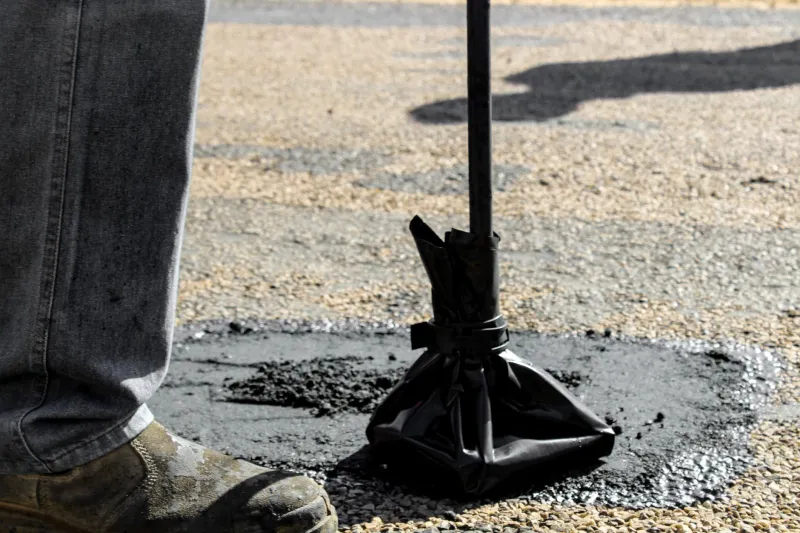
Reporting a pothole can feel like posting a letter into a very deep council bin. You get a reference number, maybe an automated email, then silence. But there is a process behind the silence. It is not magic, and it is not always fair, but it is knowable.
This is the bit most of us never see: what happens between the online form and the yellow jacket at the roadside.
The form is the start, not the fix
When you report a street problem, it usually goes into a highways asset management system. That is a database of roads, footways, gullies, signs and inspection records. The council uses it to log the report, assign a reference and decide what happens next.
The first stop is triage. Someone—or increasingly something—checks whether the report is complete and whether the location is on a road the council maintains. That last point matters. In London, some major roads are managed by Transport for London. National Highways looks after motorways and major A-roads. Some estate roads, private streets and unadopted lanes are not the council’s responsibility at all. If the report is in the wrong place, it may be closed with a note rather than inspected.
If the location is right, the report goes to an inspector. The inspector may visit as part of a routine safety inspection or as a one-off response. They record what they find: the size of the defect, its depth, its position in the road, the traffic speed and whether it is on a bus route, near a school or on a busy junction.
Triage: how a hole becomes a number
Councils do not treat every pothole the same. They use an inspection manual and intervention levels. A common threshold is around 40mm deep, but it varies. A defect may also need to be a certain width or pose a clear risk before it triggers a repair.
Safety defects are usually placed in categories. An emergency defect—think a deep hole in a live traffic lane—may get a temporary repair or barriers quickly. A less severe defect may be programmed for a permanent repair later. Some councils use terms like Category 1, Category 2 or Priority 1, 2 and 3. The labels differ; the principle is the same: risk and resources decide the order.
This is where residents often feel the system is unfair. A pothole outside your house may feel urgent to you, but if it is on a quiet residential street it may rank lower than a similar hole on a main road. That is not necessarily a conspiracy. It is a prioritisation matrix. But you can ask to see it.
The programme is where politics meets tarmac
A permanent repair is rarely a one-off job. Councils batch work into programmes to save money and reduce disruption. A gang might spend a week in one area fixing a list of defects. The list is shaped by inspection results, budget, weather and the availability of crews.
There is also the revenue and capital split. Filling a pothole can be revenue maintenance; resurfacing a whole street is usually capital. A council may have money for one and not the other. That is why you sometimes see a patch repair rather than a proper resurface.
Weather matters more than most people realise. Potholes get worse after freeze-thaw cycles. A repair done in cold, wet conditions may fail sooner. A temporary fix is not always a fob-off; sometimes it is the only sensible option until the surface can be properly sealed.
What you can ask to see
You can ask for the inspection record for the location. You can ask what priority category the defect was given, whether a works order has been raised and what the target date is. You can ask whether the repair is temporary or permanent.
If the council refuses, you can make a request under the Environmental Information Regulations 2004. Highways maintenance records are usually environmental information because they relate to the state of the land and public safety. That does not guarantee disclosure of everything, but it gives you a route.
You can also ask for the council’s highways inspection manual, its intervention levels and its prioritisation policy. These are often published, but not always easy to find. A short email to the highways team asking for the current policy is a reasonable start.
How to write a report that gets taken seriously
A good report is specific, factual and easy to match to a location. Include:
- The exact street name and nearest house number or landmark.
- The direction of travel and lane, if relevant.
- What3words if the location is awkward.
- The size and depth of the defect, with a photo that includes something for scale.
- Several photos from different angles, including one showing the wider road.
- The date and time you reported it.
- Any previous reference numbers for the same spot.
- A clear description of the hazard: “deep enough to unseat a cyclist” is more useful than “disgusting road”.
Then ask for the reference number, the inspection date and the priority category. Follow up after ten working days if you have heard nothing. If the defect is genuinely dangerous—a deep hole in a busy lane, a missing drain cover—phone the council’s emergency highways line rather than relying on the form.
The silence is not the end
Keep your reference number. Keep a note of dates. If the report is closed without a repair, ask why. If it is programmed, ask for the date. If it keeps getting patched, ask whether a resurfacing scheme is planned.
The paper trail is your leverage. The council may not fix the road on your timetable, but it should be able to tell you what it knows, what it plans and why. That is not a small thing. It is how a pothole report becomes a programme—and how residents can hold the programme to account.